
Rewriting the Rules for
Women in Trade
The $2 Trillion Pivot: 5 Surprising Ways the Commonwealth is Rewriting the Rules for Women in Trade
1. The Rule of Law as Economic Infrastructure
Global trade is often viewed through a monochromatic lens of tariffs and logistics, yet its true engine is the strength of the institutions that underpin it. While the potential for intra-Commonwealth trade is projected to reach an eye-watering $2 trillion by 2030, a silent barrier remains: the structural fragility of the informal economy where the majority of the Commonwealth’s women entrepreneurs currently operate. For these women, trade policy has historically been a distant technical exercise rather than a tool for empowerment.
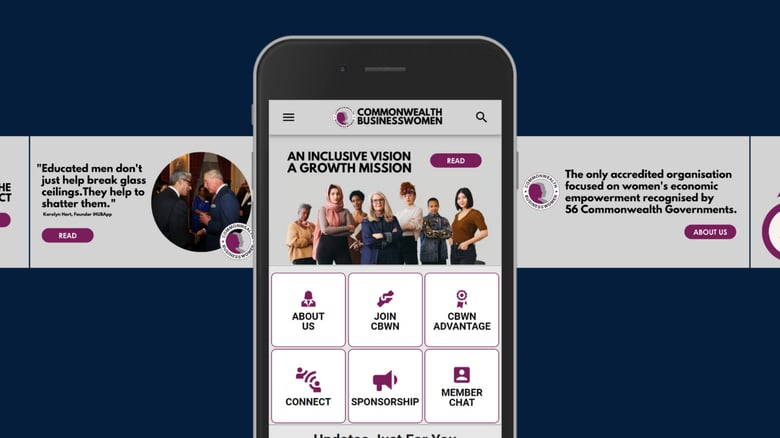
This changed in February 2026 with the adoption of the Nadi Declaration on Democratic Resilience and Participation. This document represents a profound "constitutional pivot" for the 56 member states, moving beyond political rhetoric to establish a normative foundation where democratic health is seen as a prerequisite for economic agency. As the primary link between these governments and the private sector, the Commonwealth Businesswomen’s Network (CBWN) is now translating this governance architecture into a practical roadmap for reform.
2. The "Stability Dividend": Why Democracy is a Trade Essential
A central tenet of the Nadi Declaration is the counter-intuitive yet vital link between "democratic resilience" and trade predictability. In a global landscape marked by volatility, the Declaration asserts that democratic backsliding is not just a political crisis but an economic one that specifically targets women-led businesses. When the rule of law erodes, women are the first to lose access to the legal certainties required to sustain commercial operations.
Legal certainty is the invisible infrastructure of trade finance. For women entrepreneurs, the ability to secure investment often hinges on enforceable property rights and contract law. Without these, they are effectively locked out of formal markets. The Nadi framework addresses this head-on, stating:
"There are demonstrable links between good governance, ethical public administration, and more stable and predictable trade and investment."
By framing democracy as a "stability dividend," the Commonwealth provides a mandate to ensure that trade-related legal frameworks are robust enough to protect those most vulnerable to systemic corruption or administrative opacity.
3. The 19% Edge: Navigating the "Commonwealth Advantage"
The "Commonwealth Advantage" is a documented economic phenomenon where member nations experience trade costs approximately 19–20% lower than those between non-member nations, thanks to shared legal systems and administrative traditions. However, this advantage is not an automatic entitlement; it requires a transparent regulatory regime to be accessible to the small and medium-sized enterprises (SMEs) that form the backbone of women’s entrepreneurship.
For women navigating the high "hidden costs" of corruption, the Nadi Declaration’s focus on accountability in public institutions is transformative. By harmonizing domestic laws with international standards and reducing the complexity of cross-border contracts, the Commonwealth is moving from a theoretical benefit to a practical tool that boosts the competitiveness of female-led firms.
4. From Passive Subjects to Active Architects: The New Seat at the Table
Historically, the architecture of trade has been designed through a monochromatic lens, with Free Trade Agreements (FTAs) negotiated by teams reflecting male-centric economic priorities. This has left women as passive subjects of policy rather than active participants.
The Nadi framework demands a shift toward "Meaningful Engagement," utilizing technical instruments like Gender Impact Assessments (GIAs) to evaluate how trade deals affect women’s labor rights and economic participation.
To move from consultation to co-creation, the CBWN and the London Chamber of Commerce and Industry (LCCI) advocate for three pillars of engagement:
Iterative and Continuous: Engagement must be embedded from the "zero-draft" stage through to monitoring.
Technically Supported: Targeted assistance must build the capacity of women’s organizations to navigate complex trade data and legal texts.
Representative of Diversity: Consultations must move beyond urban elites to include customary law, traditional leadership, and indigenous knowledgesystems.
This is an economic imperative. Women leaders are statistically more likely to champion gender provisions that address equal pay and gender-based violence—issues that are essential for a truly equitable and resilient global market.
5. The Digital and Blue Frontier: Innovation and Adaptation
The "new frontier" of trade inclusion lies at the intersection of technology and climate resilience. The Nadi Declaration recognizes digital transformation as a pillar of legal and democratic resilience, aligning with the CBWN’s push for paperless commerce under the CPTA framework.
To ensure this does not widen the digital divide, the focus has shifted toward "digital trade literacy," ensuring women are protected by the same legal certainties in the digital realm as they are in the physical one.
This spirit of innovation is best captured by the Nigeria National Board for Technology Incubation (NBTI) blueprint, a model for grassroots innovation that the Commonwealth is poised to replicate across member states to turn creativity into commercially viable enterprises. In tandem, the Commonwealth Investment Network (CIN) serves as the engine for these partnerships, scaling initiatives like the SheTrades Outlook, which now provides a methodology for gender-inclusive policymaking in over 64 countries.
In Small Island Developing States (SIDS), this strategy extends to the "Blue Economy." By linking democratic resilience to climate adaptation, trade policy becomes a tool for facilitating the exchange of green technologies, ensuring that women—who are primary actors in fisheries and tourism—are the ones leading the response to environmental shocks.
6. The Accountability Mandate: Data as the Language of Reform
The Nadi Declaration recognizes that policy without data is merely intent. It commits to a rigorous system of indicators and peer exchange to track progress. To ensure these commitments lead to legislative action, the CBWN advocates for three high-impact metrics:
Gender-disaggregated trade data: To track the actual number of women-owned firms engaged in export.
Participation metrics: To measure the real-world involvement of women’s organizations in FTA consultations.
Legal reform trackers: To monitor the repeal of discriminatory laws, particularly regarding inheritance and property rights, which frequently block women from accessing credit.
This data-driven approach is the only credible path toward the Commonwealth’s ambitious economic goal:
"Reaching $2 trillion in intra-member trade by 2030."
7. Conclusion: The Road to Antigua and Barbuda
As we look toward the Commonwealth Heads of Government Meeting (CHOGM) in late 2026, the Nadi Declaration serves as the definitive roadmap for an inclusive future. The strategy to prevent democratic backsliding is now indistinguishable from the strategy to empower women in business.
The immediate policy "ask" is clear: the integration of a Standard Gender Chapter in all new intra-Commonwealth FTAs. As the global trade landscape continues to shift, the Commonwealth is proving that an inclusive economy is a resilient economy. Ultimately, we must ask: does the future of global prosperity depend less on the reduction of tariffs and more on the strength and inclusivity of our democratic institutions? For the 2.7 billion citizens of the Commonwealth, the answer is a resounding yes.
